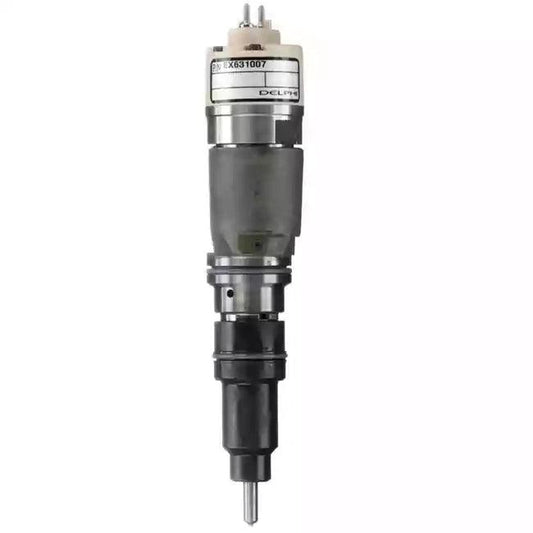
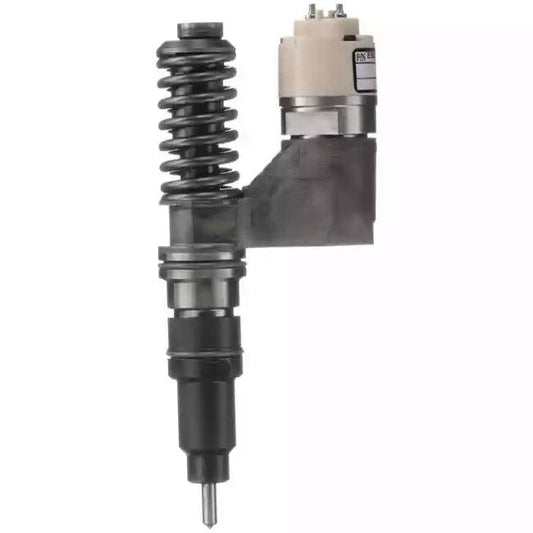


In heavy equipment maintenance, few customer complaints are as alarming as an engine that develops harsh metallic combustion knock ("diesel rattle"), white-grey unburnt fuel smoke, or rough hunting idle immediately after installing a brand-new set of common-rail fuel injectors. In many field workshops, technicians immediately assume the replacement injectors are defective or incorrectly built. However, forensic analysis reveals that over 85% of post-installation running faults stem from two preventable issues: misinterpreting common-rail bench test calibration protocols, or failing to program alphanumeric injector calibration trim codes (IQA / IMA / QR codes) into the Engine Control Module (ECM). Modern common-rail injectors operate with injection events split into multiple micro-doses measured in single-digit cubic millimeters. This engineering guide explains how to read and verify an injector bench test sheet, understand critical test stages (pilot injection, full load, return flow), and execute correct in-chassis calibration across Caterpillar, Komatsu, Cummins, and Isuzu diesel engines.
1. The 5 Core Stages of a Certified Common-Rail Injector Bench Test
Precision calibration benches (such as Bosch EPS 708/815, Hartridge Sabre CRi, or authorized Denso test stands) evaluate common-rail injectors across five standardized operating regimes representing real engine loads:
| Test Stage & Code | Operating Rail Pressure & Pulse Width | Engine Performance Impact & Failure Symptoms |
|---|---|---|
| Leak-Off / Return Flow (RL) | 1,600 to 2,000 bar (Static & Dynamic) | Evaluates internal control valve tightness. Excessive back-leakage dumps rail pressure back to tank, causing hard hot starting and P0087 low pressure derates. |
| Full Load Delivery (VL) | 1,400 to 1,800 bar / 1,200–1,500 µs | Measures maximum fuel delivery quantity at full hydraulic digging load. Low delivery causes power loss; high delivery causes black smoke and elevated exhaust gas temperature (EGT). |
| Mid-Range / Emission (EM) | 800 to 1,200 bar / 700–900 µs | Represents cruising and standard machine work cycles. Imbalance across cylinders causes engine vibration and poor fuel economy. |
| Low Idle Delivery (LL) | 250 to 350 bar / 400–600 µs | Evaluates micro-injection stability at minimum rail pressure. Imbalance causes erratic idle, hunting, and engine misfire codes. |
| Pilot / Pre-Injection (VE) | 800 to 1,200 bar / 180–250 µs (1.0–2.5 mm³/stroke) | Delivers a microscopic fuel puff milliseconds before main injection to prime cylinder flame. Zero or low pilot delivery causes violent diesel combustion knock; excess pilot causes white smoke. |
2. Why Injector QR / Trim Coding Is Mandatory (Preventing Diesel Knock)
Due to sub-micron manufacturing tolerances, no two high-pressure fuel injectors possess identical flow rates or solenoid response times straight out of assembly. Even a 0.5-milligram delivery variation between cylinders creates noticeable torsional vibration on a heavy diesel crankshaft.
To eliminate this physical discrepancy, calibrated injectors undergo automated bench flow mapping. The test stand generates an alphanumeric Calibration Trim Code (Denso QR code, Bosch IMA code, Caterpillar Trim File, or Cummins CPL Trim Code). This code acts as a mathematical correction offset matrix:
- Without ECM Coding: The engine controller assumes a generic nominal injector. If the replacement injector naturally delivers +1.5 mm³ more pilot fuel or opens 30 microseconds earlier than nominal, cylinder peak pressure spikes dramatically, producing a terrifying metallic knock that sounds like a spun rod bearing.
- With ECM Coding: The technician inputs the alphanumeric code into the ECM via Cat ET, Komatsu K-Detect, or Cummins Insite. The ECM reads the specific offset and automatically trims the electrical energizing pulse width (µs) for that specific cylinder, achieving silky-smooth idle and balanced power.
3. Common Diagnostic Fault Codes Caused by Missing or Incorrect Trim Coding
When replacement injectors are installed without programming their calibration codes, electronic control units flag specific performance deviations:
- P0263 to P0272: Cylinder No. 1 through Cylinder No. 8 Contribution / Balance Fault. The ECM detects that the crankshaft acceleration rate following injection on that cylinder is outside expected tolerance bands.
- P268C to P2692: Cylinder Injector Calibration Data Incompatible / Missing. Flashed when an ECM detects an unprogrammed cylinder slot or an invalid checksum in the trim code matrix.
- P0087: Fuel Rail Pressure Below Normal Operating Range. Often flagged when worn injectors with excessive back-leakage (RL failure) are mistakenly left in the engine alongside new units.
4. Step-by-Step Field Verification & Installation Protocol
Follow these steps whenever receiving and installing tested common-rail injectors:
- Step 1: Inspect the Calibration Certificate: Verify that all five delivery stages (RL, VL, EM, LL, and VE) fall squarely within green OEM tolerance bands. Pay critical attention to the VE (Pilot Injection) column: delivery must be between 1.0 and 2.5 mm³/stroke, and response time (BIP delay) must not exceed 320 microseconds.
- Step 2: Measure Electrical Coil Resistance: Using a calibrated multimeter, measure across the two injector solenoid pins. Solenoid resistance must read between 0.2 and 0.5 ohms at 20°C (68°F). Verify insulation resistance between either terminal and the injector steel body; resistance must show open circuit (>100k ohms).
- Step 3: Cylinder Sleeve Cleanliness & Copper Washer Selection: Thoroughly wire-ream carbon from the bottom of the injector well and vacuum all grit. Always install a new OEM-specification copper crush washer on the nozzle tip. Never reuse old washers or double-stack washers, as altered nozzle protrusion distorts the combustion bowl spray angle and burns piston crowns.
- Step 4: Hold-Down Clamp Torquing: Tighten the hold-down clamp bolt evenly to manufacturer specification: 25 to 30 Nm (18 to 22 lb-ft) depending on engine model. Over-torquing bows the injector body and binds the internal needle.
- Step 5: Input Trim Codes Before Initial Engine Start: Before cranking, connect diagnostic software. Carefully input the individual alphanumeric trim code printed on the top body or electrical connector of each injector into its corresponding cylinder slot. Double-check for transcription errors between the digit '0' and letter 'O', or digit '1' and letter 'I'.
WARNING: High-Pressure Fluid Injection Safety Hazard
Common-rail fuel systems operate at extreme pressures up to 2,000 bar (29,000 psi). High-pressure diesel spray will penetrate heavy industrial gloves and human skin, causing catastrophic subcutaneous tissue trauma, chemical infection, and emergency surgical amputation. Always shut off the engine and wait at least 15 minutes for accumulator pressure to dissipate before loosening fuel lines. Never inspect suspected leaks with bare hands; use cardboard or clean wood. Never loosen high-pressure rail lines while the engine is running or cranking.
5. Product Recommendations & Companion Technical Guides
Ensure smooth engine operation, balanced cylinder delivery, and zero knock with factory-calibrated common-rail injectors:
Calibration Guarantee: Every common-rail fuel injector supplied by FuelPartsPro is tested on computer-controlled test benches and includes individual calibration trim codes to ensure instant plug-and-play installation without combustion knock.
Explore our companion diagnostic and cross-reference engineering guides: