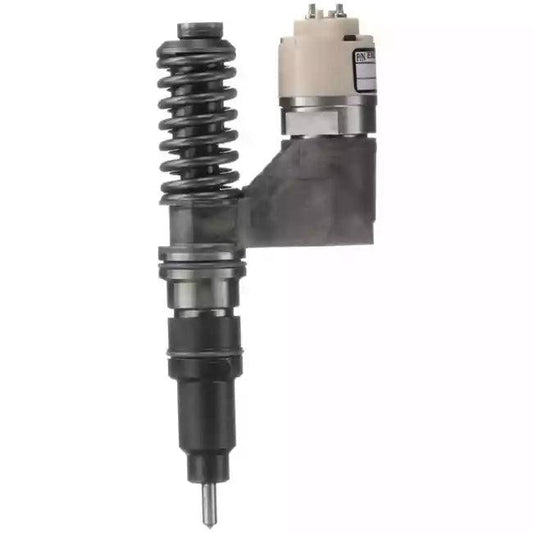


Understanding DTC P0088: The Danger of Common Rail Overpressure
Encountering fault code P0088 (Fuel Rail / System Pressure – Too High) on an electronically controlled high-pressure common rail (HPCR) diesel engine is an urgent condition. Unlike low-pressure codes (such as P0087) where an engine simply starves or loses power, an uncontrolled hydraulic overpressure event actively threatens the structural integrity of the high-pressure fuel system.
When fuel rail pressure spikes past engineered design limits, technicians frequently observe severe combustion clatter (often described as intense metallic "diesel hammer"), heavy black smoke, immediate engine derate (limp-home mode), or an abrupt automatic ECU shutdown. If left unresolved, continuous overpressure will rupture the mechanical pressure limiter valve (PRV), crack fuel injector bodies, burst high-pressure steel injection lines, or wash cylinder walls due to abnormal fuel droplet penetration.
Technical Specifications & High-Pressure Parameters
Modern common-rail fuel architectures deployed across commercial trucks, excavators, and industrial machinery rely on tight electronic balance between low-pressure delivery and rail pressure relief. Understanding the baseline operating thresholds is essential before tearing down components:
- Normal Operating Pressures: Cranking and low idle typically operate between 250 and 450 bar (3,600–6,500 psi). Under maximum rated engine torque and full load, rail pressure reaches 1,600 to 2,000+ bar (23,200–29,000 psi).
- P0088 ECU Trigger Criteria: Triggered when measured rail pressure exceeds commanded rail pressure by a calibrated margin (typically >150–250 bar / 2,175–3,625 psi) for longer than a specified calibration threshold (typically 400 milliseconds to 2 seconds), or whenever live pressure surpasses the absolute maximum system threshold (often >1,850 to 2,200 bar depending on engine platform).
- High-Pressure Pump Platforms: Denso HP3 (twin-plunger, e.g., 294000-series), Denso HP4 (three-plunger, e.g., 294050-series), Bosch CP3.3 (radial three-piston), and Bosch CP4 series.
- Safety Pressure Limiter Valve (PRV): A mechanical spring-loaded relief valve on the rail designed to burst open at a safety threshold (typically between 1,900 and 2,300 bar). When tripped by a P0088 pressure spike, the PRV unseats and dumps fuel into the return circuit, often triggering secondary fault codes.
Machine & Vehicle Applications
DTC P0088 is frequently encountered across industrial machinery and commercial fleets equipped with Bosch and Denso common-rail platforms, including:
- Komatsu Hydraulic Excavators: PC200-8, PC220-8, PC270-8 powered by Komatsu SAA6D107E-1 engines (Cummins QSB6.7 architecture) utilizing Bosch CP3 high-pressure fuel systems.
- Hitachi Zaxis Excavators: ZX200-3, ZX240-3, ZX270-3, and ZX330-3 utilizing Isuzu 4HK1 and 6HK1 engines equipped with Denso HP3 / HP4 fuel injection pumps.
- Caterpillar Excavators & Loaders: CAT 320D and 323D powered by Caterpillar C6.4 engines, as well as C7 and C7.1 industrial platforms.
- Commercial Medium-Duty Trucks: Isuzu NPR, NQR, NRR (4HK1-TC / 6HK1-TC), Mitsubishi Fuso Canter (4M50 / 4P10), and Dodge Ram Cummins 5.9L / 6.7L platforms.
Engineering Warning: Always verify the fuel metering actuator strategy. Many heavy-duty Denso HP3 and Bosch CP3 applications utilize normally-open Suction Control Valves (SCV / MPROP / IMV), where zero electrical current causes the valve to spring fully open to deliver 100% pump displacement. Conversely, certain automotive configurations utilize normally-closed actuators. Mistaking the actuator control logic leads to completely incorrect electrical diagnostics.
Diagnostic Trouble Codes Associated with P0088
P0088 rarely appears without related context in the freeze-frame log. Analyzing companion DTCs provides direct visibility into whether the overpressure is mechanical, hydraulic, or electrical:
| DTC Code | Description | Diagnostic Correlation with P0088 |
|---|---|---|
| P0087 | Fuel Rail / System Pressure Too Low | Frequently logged immediately following P0088 if the overpressure spike blew open the mechanical rail pressure limiter valve, dumping pressure. |
| P0093 | Fuel System Large Leak Detected | Triggered when the pressure limiter valve opens and dumps high-volume fuel into the low-pressure return line. |
| P0251 | Injection Pump Fuel Metering Control "A" Fault | Indicates open circuit, short to voltage, or PWM driver circuit fault in the pump's inlet metering valve (SCV/IMV). |
| P0193 | Fuel Rail Pressure Sensor Circuit High Input | Points to an electrical open circuit on sensor ground or a short-to-reference on the signal line, causing a false 5.0V reading that the ECU interprets as max rail pressure. |
| SPN 157 / FMI 0 & 16 | Fuel Rail Pressure: High Data Valid but Above Normal Range | The standard SAE J1939 telematics equivalent recorded on heavy-duty equipment controllers (e.g., Komatsu, Cummins, Cat). |
Systematic Step-by-Step Diagnostic Sequence
Never replace high-pressure fuel pumps or fuel rails on assumption. Follow this methodical engineering diagnostic sequence to isolate the true root cause:
Step 1: Scan Tool Freeze-Frame & Live Sensor Verification
Before disconnecting any hydraulic line, gather baseline scan tool telemetry:
- Connect your diagnostic scan tool and verify live Fuel Rail Pressure (FRP) with key-on, engine-off (KOEO). With the engine stationary, actual rail pressure must read 0 bar (0 psi), corresponding to an analog output voltage between 0.45V and 0.55V.
- If rail pressure reads 1,800+ bar or 4.8V to 5.0V with the engine off, the hydraulic circuit is not overpressurized. You are dealing with an electrical failure: a disconnected sensor ground, a damaged wiring harness, or a failed rail pressure sensor that has drifted off calibration.
- Graph commanded (desired) rail pressure versus actual rail pressure during idle. If actual rail pressure immediately runs away and pegs at maximum pump output while commanded pressure remains at 350 bar, the ECU has lost mechanical or electrical metering control.
Step 2: Low-Pressure Fuel Return Line Restriction Inspection
A restricted fuel return circuit is one of the most frequently overlooked causes of persistent P0088 faults in heavy equipment:
- Modern common-rail systems rely on the return manifold to discharge unused fuel from the high-pressure pump body, injector control chambers, and rail relief valve back to the tank.
- If the chassis fuel return line is crushed, pinched under a cab mount, kinked, or if an in-line return check valve is jammed shut, severe hydraulic backpressure builds up in the injector spill circuits and pump gallery (>2 to 3 bar).
- High return backpressure prevents the injector control valves and electronic pressure regulators from bleeding off pilot volume, artificially driving rail pressure upward.
- Testing Method: Disconnect the main return hose at the fuel tank inlet and route it into a clean container. If the engine idle immediately smooths out and rail pressure returns to target setpoints, the obstruction is located downstream in the tank return pipe, cooler, or check valve.
Step 3: Suction Control Valve (SCV / IMV) Electrical & Mechanical Check
The metering valve mounted on the high-pressure pump (Denso SCV or Bosch MPROP/ZME) meters the volume of fuel admitted into the high-pressure pumping plungers:
- Electrical Verification: Disconnect the SCV harness plug. Measure coil resistance across the two valve pins at 20°C (68°F). Expected values: typically 1.5 to 3.0 ohms on Denso HP3/HP4 systems; 2.5 to 4.5 ohms on Bosch CP3 systems. Measure each terminal to pump ground to verify no internal coil short (must read infinite / open circuit).
- PWM Control Signal: Backprobe the harness while running (or use scan tool active test) to verify PWM duty cycle. If the wiring harness between the ECU and SCV has an open circuit or loose terminal tension, a normally-open SCV will drop to zero current and default to 100% full-flow fuel delivery.
- Mechanical Stiction / Jamming: Remove the SCV and inspect its internal sliding spool under bright magnification. Fine varnish, fuel gumming, or microscopic particulate scoring can cause the spool to stick in the open position. Clean with approved solvent or replace the SCV if sticking or scoring is evident.
Step 4: Mechanical Pressure Limiter Valve (PRV) Inspection
Inspect the common rail relief valve located at the end of the fuel rail:
- A P0088 overpressure event often forces the mechanical PRV to unseat. Once a mechanical limiter valve opens under severe pressure shock, its internal calibration spring may fatigue or fail to reseat perfectly.
- Perform a return leak check on the PRV: Disconnect its low-pressure spill line and verify that zero fuel escapes during idle. If fuel constantly trickles from the PRV, it must be replaced after the root cause of the overpressure has been eliminated.
Step 5: High-Pressure Fuel Pump Internal Inspection
If low-pressure return backpressure is normal, the rail pressure sensor reads accurately, and the SCV electrical and mechanical checks pass, evaluate the high-pressure pump:
- On Bosch CP3 pumps, inspect the internal cascade overflow valve (pressure regulator valve inside the pump body) that controls internal transfer pressure. If the overflow valve sticks closed, internal housing pressure spikes, forcing excess fuel past the metering orifice.
- Inspect the fuel inlet filter and drained fuel for microscopic brass or metal flaking. Wear particles can circulate through the pump metering passage, jamming internal hydraulic regulators.
High-Pressure Depressurization Safety Warning
CRITICAL SAFETY HAZARD: EXTREME OVERPRESSURE UP TO 2,000+ BAR (29,000 PSI)
A diesel fuel system logging DTC P0088 is under dangerous hydraulic stress. Fluid injection injuries occur in milliseconds when high-pressure diesel penetrates skin, fascia, and deep muscle tissue. These injuries are catastrophic medical emergencies that often appear minor externally but cause rapid compartment syndrome, tissue necrosis, or amputation if not treated immediately.
- Never attempt to locate hydraulic leaks using bare hands, fingers, or shop rags. Always use a piece of cardboard or wood held at a safe distance with safety goggles on.
- Never loosen or crack high-pressure fuel lines, injector feed pipes, or rail fittings while the engine is running or cranking. Under P0088 conditions, releasing a pressurized fitting can produce a lethal high-velocity fuel jet.
- Always shut off the engine and allow at least 15 to 20 minutes for accumulator rail pressure to dissipate naturally. Connect a diagnostic scan tool and verify live fuel rail pressure reads 0 bar (0 psi) before loosening any high-pressure fitting.
- Wear ANSI Z87.1-rated safety goggles, heavy nitrile work gloves, and protective workshop apparel during all fuel system servicing.
Installation Standards & ECU Adaptation Routines
When replacing hydraulic components (such as an SCV, high-pressure pump, or common rail assembly) to resolve P0088, strictly observe these installation protocols:
- Mandatory Clean-Room Practices: Contamination as small as 2 to 5 microns can jam a high-pressure metering spool. Thoroughly wash the exterior of the pump and engine block before opening any fuel fitting. Cap every disconnected line immediately with clean service plugs.
- Do Not Bend High-Pressure Lines: Steel injection pipes have precision formed inner sealing cones. Never pry or force pipes into alignment. Cross-threaded or deformed fittings create microscopic leaks and hydraulic turbulence.
- Pump Priming Before Cranking: Never crank a dry high-pressure pump. Pre-fill the pump body with clean diesel and manually prime the low-pressure circuit until bubble-free fuel flows from the return line. Dry metal-on-metal cranking causes instant scoring on precision plungers and cam lobes.
- Execute ECU Pump Learning / Calibration Reset: Modern diesel ECUs store adaptive fuel trim tables to compensate for component wear over time. After installing a new high-pressure pump or SCV, perform the scan tool's \"Pump Learn Value Reset\" or \"Suction Control Valve Initialization\" routine. Failing to reset learned values can cause hunting idle, surging, or an immediate recurring P0088 fault code.
Verified Replacement Components & Fitment Verification
When component replacement is required following diagnostic verification, install genuine-quality, factory-calibrated fuel injection parts. FuelPartsPro supplies precision-engineered common-rail components for heavy equipment and commercial diesel engines:
- For Komatsu PC200-8, PC220-8 excavators with SAA6D107E-1 engines: 6754-72-1012 / 0445020109 Fuel Injection Pump for Komatsu SA6D107E / 4D107 Engine
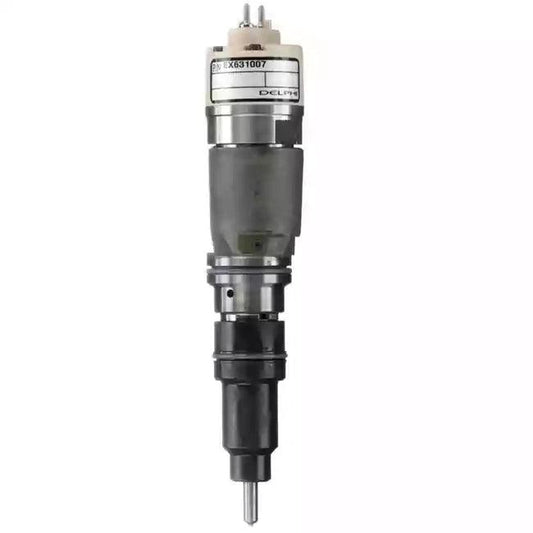
- For Komatsu PC200-8 and Cummins 6D107 common rail injectors: 0445120059 / 0445120231 / 6754-11-3011 Fuel Injector for Cummins 4D107 / 6D107
- For Hitachi ZX200-3, ZX240-3 excavators and Isuzu commercial trucks: 294000-2600 / 294000-0039 Fuel Injection Pump for Isuzu 4HK1 Engine
- For Caterpillar 320D excavators with C6.4 engines: 320-2512 / 326-4635 Fuel Injection Pump for Caterpillar C6.4 Engine
- For Komatsu SAA6D114 / Cummins ISC 8.3L applications: 6745-71-1170 / 6745-71-1180 Fuel Injection Pump for Komatsu SAA6D114 Engine
Need expert help confirming your fuel pump or injector part numbers? Common-rail fuel pumps and metering valves vary significantly by equipment arrangement, engine serial number (ESN), and emissions tier. Avoid costly downtime and mismatched parts. Send photos of your engine data plate, machine serial tag, and old pump nameplate to FuelPartsPro—our technical specialists will verify the exact catalog cross-reference before you order.