

Overview
The Volvo D6E is a 6-cylinder, 6.7-litre diesel engine that powers some of Volvo's most widely deployed mid-size excavators and construction equipment. It uses a Bosch high-pressure common rail (HPCR) fuel system, with the injection pump pressurizing fuel to 160–180 MPa and supplying the common rail for precise injector delivery. The D6E is known for its durability and fuel efficiency, but like all common rail engines, its performance depends entirely on a healthy fuel system. Pump or injector wear leads directly to power loss, hard starting, fault codes, and costly downtime on the job site.
This guide covers everything a technician needs to diagnose, troubleshoot, and repair the fuel injection system on a Volvo D6E-powered machine.
1. Engine & Fuel System Overview
- Engine: Volvo D6E (6-cylinder, 6.7L diesel)
- Emission Tier: Tier 3 / Stage IIIA
- Fuel System: Bosch High-Pressure Common Rail (HPCR)
- Max Rail Pressure: ~160–180 MPa
- Pump Type: Bosch CP3-series high-pressure pump
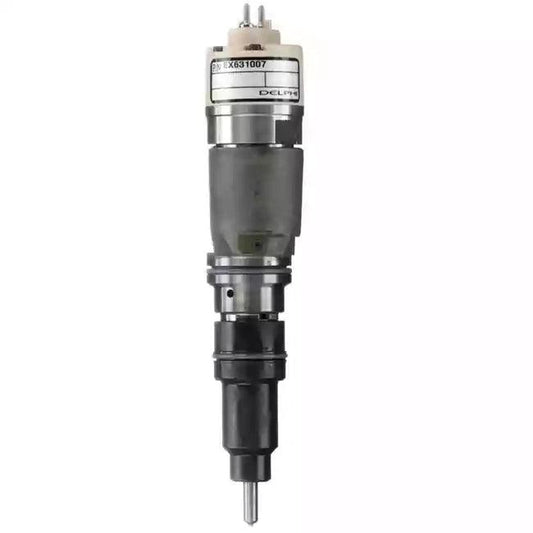
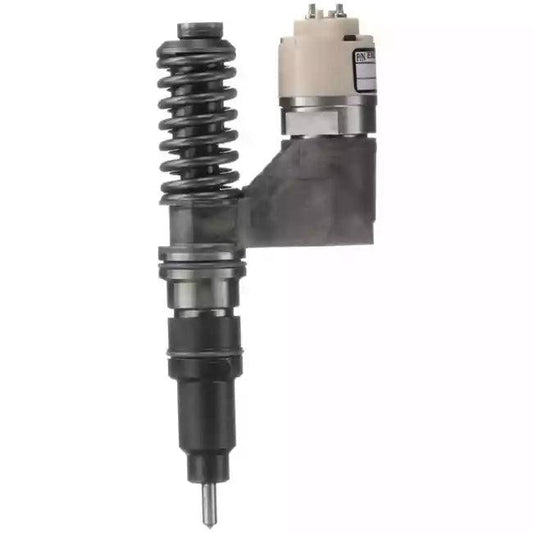
- Injector Part Numbers: 0445120067 / 04290987 / VOE20798683
2. Compatible Volvo Equipment
The Volvo D6E engine is used across Volvo's mid-size excavator and construction equipment lineup:
- Volvo EC210B / EC210B LC / EC210B NLC — the most widely deployed D6E-powered excavator globally
- Volvo EC210B Prime — updated variant with D6E engine
- Volvo EC235C — mid-size excavator
- Volvo EC240B / EC240B LC / EC240B NLC — larger D6E variant excavators
- Volvo EC240C — updated C-series excavator
- Volvo EC290B / EC290B LC — larger excavators using D6E or D7E
- Volvo EW210C — wheeled excavator
- Volvo L90F / L110F Wheel Loaders — mid-size wheel loaders with D6E engine
- Volvo A25F / A30F Articulated Haulers — off-road dump trucks
Always verify the engine serial number and machine model before ordering parts. The D6E was produced across multiple emission tiers and build years — confirm the correct injector and pump part numbers for your specific machine serial number range using the Volvo Parts Catalog (PROSIS).
3. Common Fault Codes for D6E Fuel System
When the fuel injection system begins to fail on a Volvo D6E, the Volvo ECM (VECU/EMS2) will log one or more of the following fault codes, readable via Volvo VCADS Pro, Volvo PTT (Premium Tech Tool), or compatible diagnostic tools:
- MID 128 / PSID 94 — Fuel Delivery Pressure Low: The fuel supply pressure at the pump inlet is below specification. Caused by a clogged primary filter, failed lift pump, or restricted fuel line.
- MID 128 / PID 94 / FMI 1 — Fuel Rail Pressure Too Low: The high-pressure pump cannot achieve or sustain target rail pressure. Most commonly caused by worn pump internals or a faulty pressure control valve.
- MID 128 / PID 94 / FMI 0 — Fuel Rail Pressure Too High: Overpressure condition; check the pressure control valve and rail pressure limiter.
- MID 128 / SID 1–6 / FMI 5 or 6 — Injector Cylinder 1–6 Open/Short Circuit: Injector solenoid circuit fault on a specific cylinder. Indicates electrical failure of the injector solenoid or wiring harness.
- MID 128 / SID 1–6 / FMI 7 — Injector Cylinder 1–6 Mechanical Fault: The ECM detects that the injector is not responding correctly to commands — typically caused by a stuck needle valve or severe internal wear.
- P0087 — Fuel Rail/System Pressure Too Low: Standard OBD code; most common pump-related fault on D6E.
- P0088 — Fuel Rail/System Pressure Too High.
- P0191 — Fuel Rail Pressure Sensor Circuit Range/Performance: Erratic rail pressure signal; may indicate pump output instability or a failing rail pressure sensor.
- P0201–P0206 — Injector Circuit Malfunction (Cylinder 1–6): Standard OBD code for injector solenoid open or short circuit.
4. Failure Symptoms & Diagnosis
Symptom 1: Hard Starting or No-Start
Cause: The pump cannot build sufficient rail pressure during cranking. Worn CP3 plungers or a faulty pressure control valve are the most common causes. On cold mornings, this is often the first symptom of a pump beginning to fail.
Diagnosis: Connect Volvo PTT or VCADS Pro and monitor live rail pressure during cranking. Normal cranking pressure should reach 25–50 MPa within 3–5 seconds. Values below this confirm pump output failure. Also check fuel supply pressure at the pump inlet (should be 0.3–0.6 MPa from the lift pump). Always replace the primary fuel filter before condemning the pump.
Symptom 2: Power Loss & Derate Mode
Cause: The pump cannot sustain target rail pressure under load. The ECM detects the shortfall and activates a fuel derate, limiting engine output. On a Volvo EC210B excavator, this typically manifests as reduced hydraulic power, slow boom/arm cycle times, and the machine entering limp mode.
Diagnosis: Perform a rail pressure test at full load using Volvo PTT. A healthy pump should maintain pressure within ±5 MPa of the ECM target across the RPM range. Significant pressure drop under load confirms pump wear. Rule out a clogged fuel filter and restricted fuel supply line first.
Symptom 3: Rough Idle & Engine Vibration
Cause: Inconsistent fuel delivery due to worn pump internals, a sticking pressure control valve, or a failing injector. Rail pressure oscillations cause uneven injector firing and rough idle.
Diagnosis: Monitor rail pressure at idle using Volvo PTT — it should be stable within ±2–3 MPa of the idle target (typically 30–40 MPa). Pressure oscillations greater than ±5 MPa indicate pump or pressure control valve instability. Perform a cylinder contribution (cut-out) test to identify any weak or failed injectors before condemning the pump.
Symptom 4: Injector Fault (MID 128 / SID 1–6)
Cause: The injector solenoid coil has failed (open or short circuit), or the injector wiring harness connector is damaged or corroded. The ECM cannot fire the affected cylinder.
Diagnosis: Measure injector solenoid resistance at the harness connector (typically 0.4–0.6 ohms for Bosch CRI2 injectors used in D6E). An open circuit or short to ground confirms solenoid failure. Swap the suspect injector with a known-good unit from another cylinder and re-run the contribution test to confirm the fault follows the injector. After replacement, perform an injector trim/calibration procedure using Volvo PTT.
Symptom 5: Excessive Black Smoke Under Load
Cause: A stuck-open injector needle or internal pump bypass leakage causes over-fueling on one or more cylinders, producing black smoke from incomplete combustion.
Diagnosis: Monitor exhaust temperature per cylinder using a pyrometer or scan tool data. An excessively hot cylinder indicates over-fueling (stuck-open injector needle). Perform a back-leak (return flow) test — excessive return flow from a specific injector confirms internal wear and loss of needle sealing pressure.
Symptom 6: Metal Contamination in Fuel Filter
Cause: Advanced internal pump wear generates fine metal particles that circulate through the fuel system. This is a critical failure mode that can destroy injectors if not addressed immediately.
Diagnosis: Inspect the fuel filter element and filter bowl for metallic debris (fine silver/grey particles or a metallic sheen). If found, replace the pump immediately and flush the entire fuel system before installing new injectors. Check all injectors for abnormal back-leak flow.
5. Injector Replacement Procedure (D6E)
⚠️ Safety Note: The D6E common rail system retains pressure up to 180 MPa after engine shutdown. Never loosen any fuel line fittings until the rail has fully depressurized. Turn the ignition off and wait at least 5 minutes. Wear appropriate eye protection.
- Disconnect the battery negative terminal and allow the rail to depressurize for at least 5 minutes.
- Remove the valve cover to access the injectors. Clean the valve cover area thoroughly before removal.
- Disconnect the injector solenoid wiring harness connector from the suspect injector.
- Disconnect the high-pressure fuel line from the injector inlet and the return (leak-off) line. Cap all openings immediately.
- Remove the injector hold-down clamp bolt and clamp.
- Use the correct injector puller tool to extract the injector from its bore. Never pry or hammer the injector body.
- Remove the old copper sealing washer from the injector bore. Clean the bore thoroughly.
- Install a new copper sealing washer on the replacement injector (0445120067 / VOE20798683). Lubricate the O-rings with clean diesel fuel.
- Insert the injector into the bore, install the hold-down clamp, and torque the bolt to specification (refer to Volvo D6E Service Manual — typically 40–50 Nm).
- Reconnect the high-pressure fuel line and return line with new sealing washers. Torque to specification.
- Reconnect the solenoid connector and reinstall the valve cover.
- Prime the fuel system and start the engine. Use Volvo PTT to perform an injector trim/calibration procedure — this is essential for correct fueling balance after injector replacement.
- Perform a cylinder contribution test to confirm correct operation. Check for fault codes and fuel leaks.
6. Maintenance Tips to Extend Fuel System Life
- Replace fuel filters every 500 hours or per Volvo specification — the single most important maintenance item for the D6E fuel system.
- Drain the water separator every 250 hours. Water in the fuel system causes rapid corrosion of pump internals and injector nozzles.
- Use ULSD diesel (max 15 ppm sulfur) as specified for Tier 3 engines.
- Never run the fuel tank below 1/4 full. Low fuel level increases the risk of drawing sediment and water into the pump.
- Always replace the copper sealing washer every time an injector is removed. Never reuse old washers.
- After injector replacement, always perform the injector trim/calibration using Volvo PTT. Skipping this step will result in fueling imbalance and rough running.
7. Get the Right Parts for Your Volvo D6E
If your Volvo EC210B, EC240B, or other D6E-powered machine is showing any of the symptoms above, quality replacement parts are the most reliable solution. We stock:
All parts are manufactured to OEM specifications for correct fit and reliable performance. Not sure which part fits your machine serial number? Contact us with your machine model and serial number and we'll help you identify the correct part.