

The Hitachi ZAXIS ZX200-3 (along with its sister models ZX210-3, ZX240-3, and ZX250-3) is one of the most widely deployed medium-class hydraulic excavators in earthmoving, infrastructure, and heavy construction worldwide. Powered by the 5.19-liter turbocharged, intercooled Isuzu 4HK1-X engine (Tier 3 / Stage IIIA compliant), these machines rely on a high-precision Denso Common Rail System (CRS) anchored by an engine-driven Denso HP3 high-pressure fuel injection pump delivering operating rail pressures up to 1,800 bar (26,100 psi).
When unexpected engine shutdown, sluggish hydraulic cycle times under load, hard starting when hot, or sudden engine derate occurs, technicians often jump to the conclusion that the high-pressure supply pump has mechanically failed. However, diagnostic field data shows that over 65% of common-rail pressure complaints stem from upstream supply restriction, air ingress, suction control valve (SCV) sticking, or excessive injector leak-off return flow. This engineering diagnostic guide provides a systematic, sequence-driven troubleshooting protocol to pinpoint the root cause before replacing major fuel system hardware.
1. Technical Specifications & Operating Parameters
Precision troubleshooting requires benchmarking actual sensor live data against OEM operating parameters. The Isuzu 4HK1 common-rail fuel system operates under the following baseline specifications:
| Engineering Parameter | Specification Range | Diagnostic Significance |
|---|---|---|
| Engine Displacement & Architecture | 5.19 L (5,193 cc), Inline 4-Cylinder, 16-Valve OHC | Direct injection, variable-geometry turbocharged and air-to-air intercooled |
| High-Pressure Supply Pump | Denso HP3 Series (Flange-Mounted, Gear-Driven) | Twin opposed pumping plungers actuated by eccentric cam; integrated trochoid feed pump |
| Low-Pressure Feed Vacuum / Suction | -10 kPa to -25 kPa (-3 to -7.4 in.Hg) max | Vacuum higher than -30 kPa indicates clogged primary fuel/water separator or collapsed suction hose |
| Low-Pressure Feed Delivery (Internal) | 1.5 bar to 3.5 bar (21.7 to 50.7 psi) @ cranking/idle | Supply pressure entering high-pressure pumping chamber past the internal regulating valve |
| Common Rail Cranking Pressure | Minimum 25 MPa to 30 MPa (250 – 300 bar / 3,625 – 4,350 psi) | ECM will inhibit injector firing pulses if rail pressure remains below 20 MPa during cranking |
| Idle Rail Pressure (Engine Warm) | 32 MPa to 38 MPa (320 – 380 bar / 4,640 – 5,510 psi) | Monitored by Rail Pressure Sensor (RPS) signal: ~1.2V to 1.4V output |
| Maximum Rated Working Rail Pressure | 160 MPa to 180 MPa (1,600 – 1,800 bar / 23,200 – 26,100 psi) | Full load engine acceleration, hydraulic relief pressure stall testing |
| Rail Pressure Limiter Valve (PRV) | Mechanical two-stage spring valve; crack pressure ~195 – 210 MPa | Must maintain zero leakage in normal operation; any bypass leak indicates valve failure or overpressure event |
| Suction Control Valve (SCV) Control | Normally Open (NO) pulse-width modulated (PWM) solenoid | Current range: ~1,100 mA (idle/min discharge) to 400 mA (full delivery / max pressure) |
2. Machine Application & OEM Cross-Reference Master Guide
The Isuzu 4HK1 engine architecture is shared across several heavy equipment brands and commercial truck platforms. However, Denso HP3 high-pressure fuel pumps are not universally interchangeable across differing applications due to distinct gear ratios, flange orientations, drive splines, feed pipe angles, and internal stroke calibrations.
Always inspect the stamped 10-digit manufacturing number on the pump tag (e.g., 294000-0039) and verify the machine's engine serial number (ESN) plate before ordering replacement assemblies:
| Denso Part Number | Isuzu OEM Number | Hitachi / OEM Equipment Part | Primary Machine Applications |
|---|---|---|---|
| 294000-0039 / 294000-2600 | 8-97306044-9 / 8973060449 | Hitachi 4656363 / 8973060449 | Hitachi ZAXIS ZX200-3, ZX210-3, ZX240-3, ZX250-3 (Isuzu 4HK1-X Tier 3) |
| 294000-0266 / 294000-0262 | 8-97328886-5 / 8973288865 | Hitachi 4656364 / Case KHJ10830 | Hitachi ZX200-3 / ZX240-3 / ZX270-3; Case CX210B / CX240B; JCB JS200 |
| 294000-1124 / 294000-1120 | 8-98081771-2 / 8980817712 | Hitachi 8980817712 | Hitachi ZX200-3G, ZX210-3G, ZX240-3G Tier 2/3 Export Excavators |
| 294000-1181 / 294000-1180 | 8-97386558-3 / 8973865583 | Sumitomo / Link-Belt KHR20020 | Sumitomo SH200-5, SH210-5; Link-Belt 210 X2 (Isuzu 4HK1) |
| 294050-0441 / 294050-0440 | 8-98155988-1 / 8981559881 | Hitachi 8981559881 (Denso HP4 Series) | Hitachi ZX200-5G / ZX210-5A (Later generation Isuzu 4HK1 Stage IV/Tier 4) |
Engineering Interchange Notice: Do not substitute earlier Tier 2 mechanical fuel injection pumps or later Stage IV HP4-series supply pumps onto a Tier 3 ZX200-3 machine without complete catalog verification. For in-depth part number decoding, consult our dedicated Denso HP3 Part Number Verification Guide.
3. Diagnostic Trouble Codes (DTCs) in Hitachi ZX200-3 Excavators
When the electronic engine control module (ECM) detects rail pressure anomalies or valve control circuit abnormalities, fault codes are logged in the machine monitor and Dr. ZX diagnostic software. Below are the primary diagnostic codes encountered on the 4HK1 system:
- P0087 (Flash Code 227 / Isuzu 227) – Fuel Rail Pressure Too Low: Triggered when actual rail pressure measured by the RPS falls more than 15 MPa below target rail pressure for longer than 3.0 seconds under operating load. Primary root causes include clogged pre-filters, internal injector leakage, failing SCV, or worn supply pump plungers. See our detailed guide: P0087 Diagnostic Guide.
- P0088 (Flash Code 225 / Isuzu 225) – Fuel Rail Pressure Too High: Triggered when rail pressure exceeds 185 MPa (1,850 bar) or target pressure by more than 25 MPa. Most frequently caused by a mechanically stuck open or gummed SCV plunger, broken return fuel line, or pinched return circuit creating extreme backpressure. Review the diagnostic flow: P0088 Diagnostic Guide.
- P0093 (Flash Code 228 / Isuzu 228) – Fuel System Large Leak Detected: Calculated via fuel delivery volume versus expected rail pressure increase. When actual pressure drops abruptly during heavy fuel command, the ECM assumes a high-pressure line rupture, blown pressure limiter valve, or catastrophic injector seat blowout, derating engine output immediately to 50% power. See: P0093 Leak Diagnosis.
- P0251 / P0628 / P0629 – Suction Control Valve (SCV) Drive Fault: Indicates open circuit, short to chassis ground, or drive power transistor fault in the ECM SCV control circuit. The SCV solenoid coil resistance must measure 1.9 to 2.3 ohms at 20°C (68°F). If resistance is out of specification, the solenoid coil has thermally failed. Follow our testing steps: P0251 Metering Valve Troubleshooting Guide.
4. Step-by-Step Diagnostic Sequence (Upstream Checks Before Pump Condemnation)
Never condemn the Denso HP3 supply pump without executing this 5-stage systematic isolation sequence:
Step 1: Low-Pressure Fuel Vacuum & Restriction Testing
Connect a calibrated vacuum gauge between the primary fuel/water separator outlet and the inlet of the Denso HP3 internal trochoid feed pump. Run the engine from low idle to high idle (2,000 RPM) under arm-relief hydraulic load:
- Normal Vacuum: -10 kPa to -20 kPa (-3 to -6 in.Hg).
- Excessive Vacuum (> -30 kPa / > -9 in.Hg): Indicates severe fuel flow restriction—clogged water separator element, debris in fuel tank suction strainer, or collapsed flexible fuel hose.
- Low or Zero Vacuum with Air Bubbles: Install a clear transparent PVC hose on the pump inlet. If frothing or air bubbles appear, the suction circuit is drawing air from loose hose clamps, cracked filter housings, or faulty hand-primer check valves. Air ingress prevents the HP3 pump plungers from achieving hydraulic compression.
Step 2: Return Flow Pressure & Tank Vent Inspection
Inspect the common rail return line and pump housing overflow line. Check for an obstructed return check valve or crushed steel return tubing. Fuel return circuit backpressure must not exceed 0.5 bar (7.2 psi). Ensure the fuel tank breather cap is not blocked with job site dust, which can pull a vacuum inside the diesel tank during sustained excavation work.
Step 3: Rail Pressure Limiter Valve (PRV) Static & Dynamic Leakage Test
The mechanical pressure limiter valve mounted on the end of the common rail acts as an emergency overpressure relief valve. Disconnect the rubber return line from the limiter valve and route a clear plastic hose into a clean graduated cylinder:
- Crank the engine or idle at 800 RPM.
- Pass Criteria: Zero fuel discharge (0 drops / minute).
- Fail Criteria: Any steady weeping or continuous fuel stream indicates that the precision valve seat has eroded or cracked. Fuel leaking into the return line bleeds off rail pressure, mimicking a failing HP3 pump. If fuel discharges, replace the pressure relief valve assembly immediately.
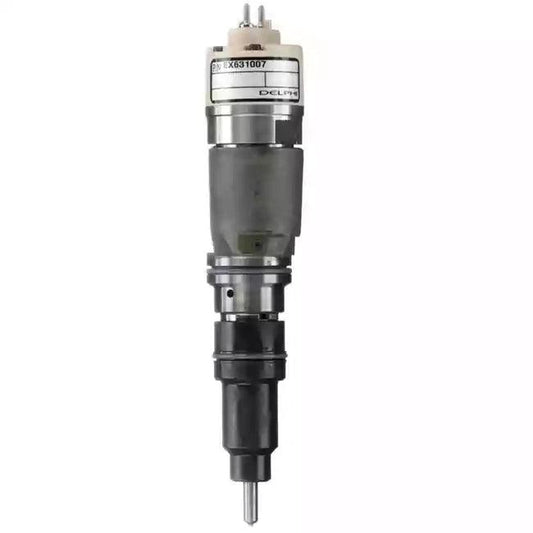
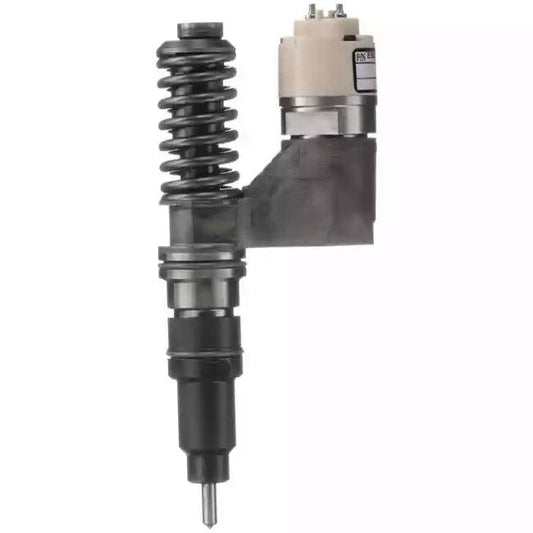
Step 4: Comparative Injector Leak-Off (Return Flow) Test
Excessive internal injector back-leakage is the single most common cause of hot-starting failure and P0087 codes on Isuzu 4HK1 engines. Measure return leakage simultaneously across all four cylinders using graduated spill bottles:
- Warm the engine to operating temperature (coolant > 75°C / 167°F).
- Run at high idle (2,000 RPM) for exactly 1 minute.
- Tolerance Limit: No individual injector should exceed 25 mL to 35 mL per minute, and variance between cylinders must remain within 25%.
- If one or more injectors return 60+ mL/minute, the control valve seat is worn out, venting high-pressure fuel directly back to the tank. For complete instructions and setup diagrams, read our Diesel Injector Leak-Off Testing Guide.
Step 5: Suction Control Valve (SCV) Duty Cycle & Electrical Waveform
Connect Dr. ZX or a dual-channel oscilloscope to the SCV terminals:
- Inspect the PWM command frequency (typically ~100 Hz to 250 Hz depending on ECM calibration).
- Monitor actual rail pressure stability at steady throttle. If rail pressure oscillates by ±10 MPa (±1,450 psi) at idle (known as "rail hunting"), the SCV sliding valve piston has suffered micro-galling or varnish buildup from contaminated diesel fuel. Remove and inspect the SCV valve bore for microscopic scoring.
5. Component Replacement & Clean-Room Installation Procedures
If diagnostic steps 1 through 5 confirm that low-pressure delivery, pressure relief valves, injectors, and SCV are within tolerance but the pump cannot achieve 25 MPa cranking pressure or maintain 160 MPa under hydraulic stall load, the Denso HP3 internal plungers and delivery valves have suffered irreversible cavitation or abrasive wear. Follow these strict engineering steps during replacement:
- Total Cleanliness Protocol: Common rail fuel injection components are manufactured with micron-level tolerances. Steam-clean the engine bay and blow dry before opening any fuel connections. Never unseal a replacement HP3 pump until ready for immediate installation. Always cap open rail ports with plastic clean-caps immediately.
- Fuel System Flushing: If the previous HP3 pump suffered internal roller or cam seizure, inspect the fuel filter bowl for metallic flakes. If brass, bronze, or steel filings are present, the entire fuel system must be flushed: drain and steam the fuel tank, replace all primary and secondary filters, and ultrasonically clean or replace the rail and return circuits. Installing a new pump into a contaminated system causes instant premature failure.
- Timing & Drive Gear Engagement: The Denso HP3 pump on the Isuzu 4HK1 is driven off the rear gear train. While the HP3 is a non-phased pump (continuous delivery to common rail), ensure the drive gear backlash and mounting flange O-ring are torqued evenly to OEM specification (50 Nm / 37 lb-ft) with clean engine oil applied to the seal.
- Low-Pressure Priming & Air Bleeding: Never crank an engine with a dry high-pressure pump. Diesel fuel serves as both the hydraulic medium and the internal lubricant. Use the hand-primer on the primary filter head to purge all trapped air through the pump bleeder screw until solid fuel with zero air froth emerges.
- ECM SCV Adaptation & Learning Reset: After installing a new Denso HP3 pump or replacement SCV, connect Dr. ZX diagnostic software to the service port in the cab. Navigate to Engine Maintenance and execute the "Supply Pump Initial Learning / SCV Learned Value Reset" procedure. This recalibrates the ECM's pulse-width modulation output to match the precise flow characteristics of the new metering valve.
⚠ MANDATORY HIGH-PRESSURE SAFETY WARNING: FLUID INJECTION HAZARD
Denso Common Rail systems on the Isuzu 4HK1 operate at pressures up to 1,800 bar (26,100 psi) — sufficient velocity to penetrate heavy work gloves, skin, and subcutaneous muscle tissue!
- Never loosen or crack high-pressure fuel lines while the engine is running or cranking to bleed air. Trapped air must be purged exclusively through the low-pressure priming circuit.
- Enforce Depressurization Hold Times: After shutting down the engine, wait a minimum of 5 minutes for residual rail pressure to bleed down through the internal injector circuit before opening any fuel line or sensor connection.
- Skin Penetration Hazard: High-pressure diesel injection injuries are medical emergencies requiring immediate surgical debridement. Never use bare hands or fingers to check for suspected pinhole leaks; always use a piece of clean cardboard or wooden dowel held with safety tongs.
- Always wear ballistic safety glasses or a full-face safety shield and nitrile gloves during diagnostic pressure testing.
6. Genuine Replacement Parts & Technical Support
To eliminate downtime and ensure exact hydraulic match for your Hitachi hydraulic excavators, FuelPartsPro stocks factory-calibrated Denso HP3 high-pressure fuel injection pumps, genuine suction control valves, and precision common rail components:
- 294000-0039 / 8-97306044-9 Fuel Injection Pump for Isuzu 4HK1 Engine – Direct OEM replacement for Hitachi ZX200-3, ZX210-3, ZX240-3, and ZX250-3 excavators.
- 294000-0266 / 8-97328886-5 / 294000-0262 Fuel Injection Pump for Isuzu 4HK1 – Heavy-duty Denso HP3 configuration for Hitachi ZAXIS-3 and Case CX210B excavators.
- 294000-2600 / 294000-0039 Fuel Injection Pump for Isuzu 4HK1 Engine – Factory bench-tested assembly matching OEM flow curves.
- 294000-1124 / 8-98081771-2 Fuel Injection Pump for Isuzu 4HK1 – Calibrated for Hitachi ZX200-3G and regional Tier 3 heavy equipment variants.
- 294050-0441 Fuel Injection Pump for Isuzu 4HK1 Engine – Genuine Denso HP4 pump for later generation Stage IV / Tier 4 excavators.
Need Fitment Verification? Diesel injection pump configurations vary by engine arrangement and production year. If you are uncertain about part compatibility, contact our technical team with a clear photograph of your engine data plate (ESN) and the stamped 10-digit number on your existing pump tag. Our diesel specialists will verify exact catalog fitment before dispatch.