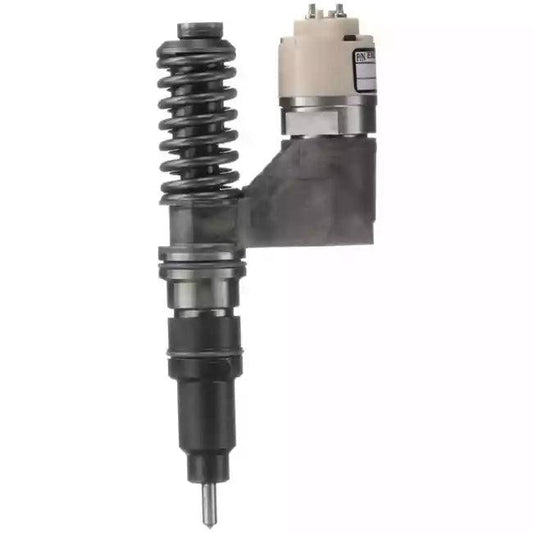


Overview
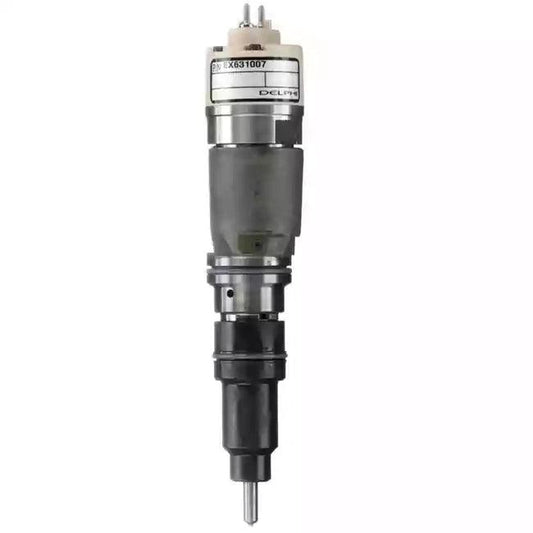
The 0445120059 (cross-references: 0445120231, 6754-11-3011) is a Bosch common rail fuel injector designed for the Cummins 4D107 and 6D107 diesel engines — the powerplant behind Komatsu's most popular excavator and wheel loader lineup. As a solenoid-controlled common rail injector, it delivers precisely metered, high-pressure fuel directly into the combustion chamber multiple times per cycle. Injector performance is critical: even a 5% deviation in flow rate between cylinders causes measurable power loss, increased fuel consumption, and elevated emissions. Understanding how to diagnose and replace this injector is essential knowledge for any technician working on Komatsu equipment.
1. Part Specifications
- Part Numbers: 0445120059 / 0445120231 / 6754-11-3011
- Injector Type: Bosch Common Rail Solenoid Injector (CRI2 series)
- Engines: Cummins 4D107 (4-cylinder, 4.5L) / Cummins 6D107 (6-cylinder, 6.7L)
- Emission Tier: Tier 3 / Stage IIIA
- Operating Rail Pressure: Up to 160–180 MPa
- Actuation: Solenoid-controlled needle valve
- Injection Events: Up to 5 per cycle (pilot, pre, main, post, after)
2. Compatible Vehicles & Equipment
The 0445120059 injector is used across Komatsu's most widely deployed excavator and wheel loader models, as well as other OEM equipment using the 4D107/6D107 engine platform:
- Komatsu Excavators — PC200-8, PC200LC-8, PC210-8, PC220-8, PC240-8, PC270-8 (6D107 engine)
- Komatsu Excavators (4D107) — PC130-8, PC160-8, PC180-8
- Komatsu Wheel Loaders — WA320-6, WA380-6 (6D107 engine)
- Komatsu Dump Trucks — HM300-2, HM350-2 articulated haulers
- Case Construction — CX210B, CX240B excavators (Cummins QSB6.7 / 6D107 variant)
- New Holland — E215B, E265B excavators
- Industrial & Generator Applications — Stationary power units using the 4D107/6D107 base engine
Always verify the engine serial number and injector part number stamped on the injector body before ordering. The 4D107 and 6D107 share the same injector design but differ in cylinder count — confirm your engine variant and the correct quantity required.
3. Common Fault Codes Associated with This Injector
When the 0445120059 injector begins to fail, the Cummins ECM (CM2150 or CM850) and Komatsu machine controller will log one or more of the following fault codes, readable via Cummins INSITE, Komatsu KOMTRAX/EMMS, or compatible diagnostic tools:
- SPN 651–656 / FMI 5 or 6 (Cummins) — Injector Cylinder 1–6 Open/Short Circuit: The injector solenoid circuit has an open or short circuit fault. Indicates electrical failure of the injector solenoid coil or wiring harness.
- SPN 651–656 / FMI 7 — Injector Cylinder 1–6 Mechanical Fault: The ECM detects that the injector is not responding correctly to commands — typically caused by a stuck needle valve or severe internal wear.
- P0201–P0206 — Injector Circuit Malfunction (Cylinder 1–6): Standard OBD code for injector solenoid open or short circuit.
- P0261–P0272 — Injector Circuit Low/High (Cylinder 1–6): Voltage out of range on the injector control circuit.
- P0300–P0306 — Random/Multiple Cylinder Misfire: Often triggered by a failed or weak injector causing incomplete combustion.
- Komatsu Error E03-1 — Fuel System Pressure Low: Can be triggered by severe injector back-leak causing rail pressure to drop below the ECM threshold.
- Komatsu EMMS Code A410L / A411L — Injector Drive Circuit Fault (Cylinder-specific): Komatsu machine controller fault indicating injector solenoid circuit abnormality on a specific cylinder.
4. Failure Symptoms & Diagnosis
Symptom 1: Rough Idle & Engine Vibration
Cause: Uneven fuel delivery between cylinders due to a worn injector needle, partially blocked nozzle tip, or internal solenoid wear. The affected cylinder fires inconsistently, causing the engine to run rough at low load.
Diagnosis: Perform a cylinder contribution (cut-out) test using Cummins INSITE or Komatsu EMMS. Disable each injector one at a time and monitor RPM drop. A faulty injector will show little or no RPM change when cut out, compared to a healthy cylinder which causes a noticeable drop. A deviation of more than 15% from the average contribution confirms injector replacement is needed.
Symptom 2: Power Loss & Black Smoke Under Load
Cause: A partially blocked nozzle tip restricts fuel flow, reducing power output. Alternatively, a stuck-open needle valve causes over-fueling on the affected cylinder, producing black smoke from incomplete combustion.
Diagnosis: Monitor exhaust temperature per cylinder using a pyrometer or scan tool data. A cold cylinder indicates low fuel delivery (blocked nozzle); an excessively hot cylinder indicates over-fueling (stuck-open needle). Perform a back-leak (return flow) test — excessive return flow from a specific injector confirms internal wear and loss of needle sealing pressure.
Symptom 3: Hard Starting / Extended Cranking
Cause: Severe injector back-leak allows fuel to drain from the common rail back to the tank when the engine is stopped. On restart, the pump must refill the rail before injection can begin, causing extended cranking.
Diagnosis: Perform a static back-leak test: with the engine off, pressurize the rail using the diagnostic tool's rail fill function (or by cranking briefly). Monitor rail pressure decay over 30 minutes. Pressure should hold above 20 MPa. Rapid pressure drop confirms injector back-leak. Isolate the faulty injector by capping return lines one at a time.
Symptom 4: Injector Solenoid Fault (SPN 651–656 / P0201–P0206)
Cause: The injector solenoid coil has failed (open or short circuit), or the injector wiring harness connector is damaged, corroded, or has a broken terminal pin.
Diagnosis: Measure injector solenoid resistance at the harness connector (typically 0.4–0.6 ohms for Bosch CRI2 injectors). An open circuit (infinite resistance) or short to ground confirms solenoid failure. Inspect the injector connector and harness for corrosion, bent pins, or chafing. Swap the suspect injector with a known-good unit from another cylinder and re-run the contribution test to confirm the fault follows the injector.
Symptom 5: White Smoke & Fuel Smell in Exhaust
Cause: A leaking injector tip seal or cracked injector body allows fuel to enter the cylinder during the compression stroke without proper atomization, causing incomplete combustion and white/grey smoke.
Diagnosis: Perform a compression test on the suspect cylinder. Check for fuel dilution in the engine oil (diesel smell, reduced viscosity). Inspect the injector copper sealing washer and injector bore for carbon deposits or corrosion. Replace the injector and sealing washer if contamination is confirmed.
5. Replacement Procedure
⚠️ Safety Note: The 6D107 common rail system retains pressure up to 180 MPa after engine shutdown. Never loosen any fuel line fittings until the rail has fully depressurized. Turn the ignition off and wait at least 5 minutes. Wear appropriate eye protection and use proper high-pressure fuel system PPE.
- Disconnect the battery negative terminal and allow the rail to depressurize for at least 5 minutes.
- Remove the valve cover to access the injectors. Clean the valve cover area thoroughly before removal to prevent contamination.
- Disconnect the injector solenoid wiring harness connector from the suspect injector.
- Disconnect the high-pressure fuel line from the injector inlet. Cap the line and injector port immediately.
- Disconnect the injector return (leak-off) line.
- Remove the injector hold-down clamp bolt and clamp.
- Use the correct injector puller tool (Bosch or Komatsu equivalent) to extract the injector from its bore. Never pry or hammer the injector body.
- Remove the old copper sealing washer from the injector bore. Clean the bore thoroughly with a lint-free cloth.
- Install a new copper sealing washer on the replacement 0445120059 injector. Lubricate the injector O-rings with clean diesel fuel.
- Carefully insert the injector into the bore, ensuring correct orientation. Install the hold-down clamp and torque the bolt to specification (refer to Komatsu PC200-8 / Cummins 6D107 Workshop Manual — typically 40–50 Nm).
- Reconnect the high-pressure fuel line and return line. Torque to specification using new sealing washers.
- Reconnect the solenoid connector. Reinstall the valve cover.
- Prime the fuel system and start the engine. Use Cummins INSITE or Komatsu EMMS to perform an injector trim/calibration procedure — this allows the ECM to learn the new injector’s flow characteristics and is essential for correct fueling balance.
- Perform a cylinder contribution test to confirm correct operation. Check for fault codes and fuel leaks.
6. Maintenance Tips to Extend Injector Life
- Replace the primary and secondary fuel filters every 500 hours or per Komatsu/Cummins specification. Contaminated fuel is the primary cause of nozzle wear and solenoid failure in common rail injectors.
- Use a fuel water separator and drain it every 250 hours. Water causes immediate corrosion of the injector needle and seat, leading to premature failure.
- Always use clean, low-sulfur diesel (ULSD, max 15 ppm sulfur). Avoid biodiesel blends above B5 unless specifically approved for your engine variant.
- Never run the fuel tank to empty — this draws sediment and air into the system, causing injector wear and potential air lock.
- Always replace the copper sealing washer every time an injector is removed. Never reuse old washers — they will not seal correctly and can cause combustion gas leakage into the fuel system.
- After replacing an injector, always perform the injector trim/calibration procedure using the appropriate diagnostic tool. Skipping this step will result in fueling imbalance and rough running.
7. Get the Replacement Part
If your Komatsu PC200-8 or other 6D107-powered machine is showing any of the symptoms above, a quality replacement injector is the most reliable fix. Our 0445120059 / 0445120231 / 6754-11-3011 Fuel Injector for Cummins 4D107 6D107 is manufactured to OEM specifications for correct fit, accurate fuel delivery, and long service life. Order today and restore your machine to full working power.