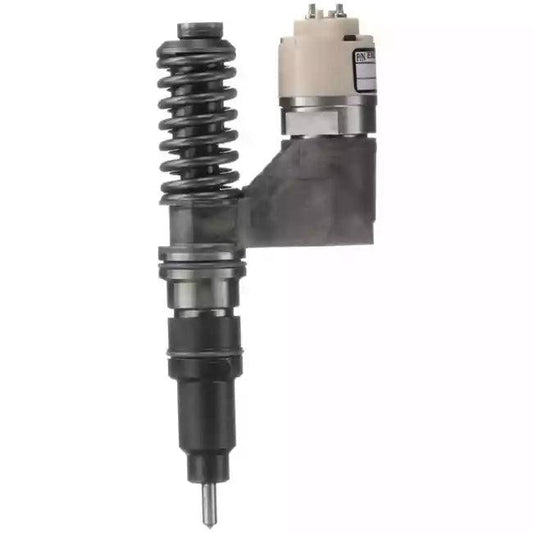


Overview
The Caterpillar C7 (and its successor, the C7.1) is a 7.2-litre, 6-cylinder diesel engine that has served as a legendary workhorse in heavy construction, commercial trucking, and industrial applications worldwide. While early C7 engines (like the C7 ACERT) relied on the HEUI (Hydraulically Actuated Electronically Controlled Unit Injection) system, later versions transitioned to a high-pressure common rail (HPCR) fuel system for better emissions control and efficiency.
For common rail C7 engines, the high-pressure fuel injection pump (such as the 476-8766) is the beating heart of the system. It pressurizes diesel up to 180 MPa before delivering it to the rail. When this pump wears out or fails, your equipment suffers from power loss, hard starts, and fault codes. This guide covers everything you need to know about diagnosing and replacing the fuel injection pump on a common rail CAT C7 engine.
1. Part Specifications
- Part Number: 476-8766 (Common Rail Pump)
- Engine: Caterpillar C7 / C7.1
- Fuel System Type: High-Pressure Common Rail (HPCR)
- Operating Pressure: Up to 180 MPa (26,000+ psi)
- Drive Type: Gear-driven from engine front gear train
- Control: Electronic pressure/suction control valve
2. Compatible CAT Equipment
The CAT C7 and C7.1 engines utilizing this style of high-pressure pump power a massive array of equipment:
- Excavators: CAT 324E, 329E, 329F, 335F
- Wheel Loaders: CAT 950K, 950M, 962K, 962M
- Motor Graders: CAT 12M, 120M, 140M, 160M
- Dozers / Track-Type Tractors: CAT D6T, D7E
- Paving Equipment: AP1000E, AP1055E asphalt pavers
- Industrial & Generator Sets: Various stationary power units
Note: Always verify your engine serial number (ESN) in CAT SIS (Service Information System) before ordering. The C7 family spans multiple generations, and parts are not interchangeable between HEUI and Common Rail systems.
3. Common Fault Codes Associated with This Pump
When the 476-8766 pump fails, the CAT Electronic Control Module (ECM) will log codes readable via Cat ET (Electronic Technician):
- Cat Code 0096-03 or 0096-04 — Fuel System Pressure Voltage Above/Below Normal: Indicates an issue with the rail pressure sensor circuit, but often triggered when pump output is highly erratic.
- Cat Code 0157-11 or SPN 157 — Injector Metering Rail #1 Pressure Data Erratic: The pump is struggling to maintain consistent rail pressure.
- P0087 (SPN 157 FMI 1) — Fuel Rail Pressure Too Low: The most common code for a worn pump. The ECM commands a specific pressure, but the pump cannot deliver it, especially under load.
- P0088 (SPN 157 FMI 0) — Fuel Rail Pressure Too High: Often caused by a sticking pressure control valve (PCV) on the pump or rail.
4. Failure Symptoms & Diagnosis
Symptom 1: Hard Starting or Extended Cranking
Cause: The high-pressure pump cannot generate the minimum rail pressure required by the ECM (usually around 30 MPa) to fire the injectors during cranking. Worn internal plungers or a stuck control valve are the usual culprits.
Diagnosis: Connect Cat ET and monitor actual vs. desired rail pressure while cranking. If actual pressure climbs very slowly or never reaches the threshold, verify fuel supply pressure from the lift/transfer pump first. If supply pressure is good (approx. 60-90 psi), the high-pressure pump is failing.
Symptom 2: Engine Derate & Power Loss Under Load
Cause: The pump can maintain pressure at idle, but cannot keep up with the fuel demand when the operator calls for full power (e.g., digging into a heavy pile with a 950K loader).
Diagnosis: Perform a loaded stall test while monitoring rail pressure in Cat ET. If pressure drops significantly below the target and the pump's control valve duty cycle is maxed out, the pump internals are worn.
Symptom 3: Rough Idle & Surging
Cause: Unstable pressure output from the pump causes erratic fuel delivery through the injectors.
Diagnosis: Check rail pressure stability at idle. It should remain within a narrow band (± 2-3 MPa). Oscillating pressure indicates a failing suction control valve or pump wear.
Symptom 4: Metal Contamination in the Fuel Filter
Cause: Internal metal-on-metal wear inside the high-pressure pump generates fine metal shavings. This is catastrophic.
Diagnosis: Cut open the secondary fuel filter and inspect the pleats. If you see silver metallic debris or a metallic paste, stop running the machine immediately. The pump must be replaced, and the entire fuel system (rail, lines, and injectors) must be flushed or replaced to prevent immediate failure of the new components.
5. Replacement Procedure
⚠️ Safety Warning: Common rail systems operate at extreme pressures. Never crack a line while the engine is running. Turn the machine off and wait at least 10 minutes for pressure to bleed down before beginning work.
- Disconnect the batteries.
- Clean the entire side of the engine around the fuel pump with brake cleaner to prevent dirt from entering the fuel system.
- Disconnect the electrical connector for the pump control valve.
- Disconnect the low-pressure supply and return lines. Cap them immediately.
- Disconnect the high-pressure line running from the pump to the common rail. Cap all fittings.
- Remove the pump gear access cover on the front timing housing.
- Rotate the engine to top dead center (TDC) and align the timing marks according to the CAT service manual. Pin the engine and the pump gear if required.
- Remove the pump gear retaining nut and use the proper CAT puller tool to release the gear from the pump's tapered shaft. Do not strike the shaft with a hammer.
- Remove the mounting bolts holding the pump to the timing housing and withdraw the pump.
- Install the new 476-8766 pump. Ensure the shaft taper is perfectly clean and dry before seating the gear.
- Torque the mounting bolts and the gear nut to exact CAT specifications.
- Reconnect all lines and electrical connectors. Always use new O-rings and sealing washers.
- Prime the fuel system thoroughly using the manual or electric priming pump.
- Start the engine, check for leaks, and use Cat ET to clear codes and verify rail pressure.
6. Maintenance Best Practices
- Fuel Quality is Everything: HPCR pumps rely entirely on diesel fuel for internal lubrication. Use high-quality Ultra-Low Sulfur Diesel (ULSD).
- Filter Changes: Replace primary and secondary fuel filters strictly according to CAT intervals (typically 500 hours). Never pre-fill the secondary filter, as this introduces unfiltered fuel directly into the pump.
- Drain Water Daily: Drain the fuel/water separator every morning before startup. Water causes immediate rust and scoring inside the pump plungers.
7. Get the Right Part for Your CAT C7
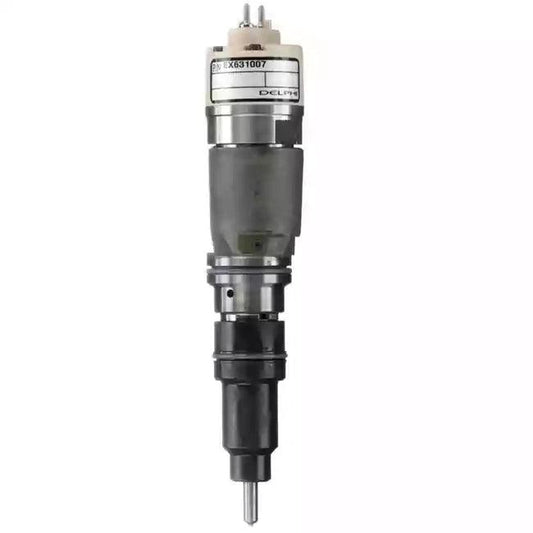
When it comes to heavy machinery, downtime is your biggest expense. Don't risk your engine with substandard parts. We offer high-quality replacement fuel injection pumps built to strict OEM standards to get your Caterpillar equipment back to work.
Need help verifying fitment? Contact our support team with your engine serial number, and we'll ensure you get the exact part you need.