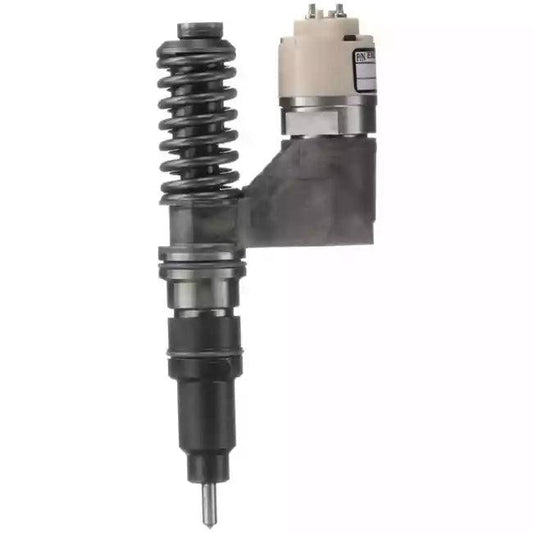


Hard starting and low rail pressure: is the pump really the problem?
When a common-rail diesel takes too long to start or loses power under load, a high-pressure pump often gets blamed first. But excessive internal leakage through one or more injectors can also prevent the rail from reaching the pressure the engine controller requests. A properly performed injector return-flow, or “leak-off,” test helps narrow the problem before expensive parts are ordered.
This article explains what the test tells you, what it cannot tell you, and how to interpret the results alongside other fuel-system checks. Always follow the engine manufacturer's test procedure; acceptable volumes and test times differ by application.
What is injector leak-off?
A common-rail injector uses some fuel for internal operation and returns it through a low-pressure return circuit. Some return flow is normal. Excessive flow may indicate internal wear or a control-valve sealing problem, but return quantity alone does not establish every possible injector fault. For example, a nozzle spray-pattern issue may require a different test.
Signs that a return-flow test may help
- Long cranking, especially when the engine is hot
- Actual rail pressure failing to reach the manufacturer's starting threshold
- Low-rail-pressure faults or reduced power under demand
- Unexplained differences between commanded and actual rail pressure after supply-side checks
The same symptoms can be caused by a restricted fuel filter, air entering the supply line, a weak lift pump, a pressure-control fault, sensor or wiring issues, or a worn high-pressure pump. Test rather than assume.
Before testing: establish a baseline
- Record all fault codes and freeze-frame data before clearing them.
- Confirm battery condition and cranking speed; slow cranking can affect pressure build-up.
- Check the fuel filter, water separator, and low-pressure supply using the manufacturer's specifications.
- Use a scan tool to record desired and actual rail pressure during the problem condition.
- Identify the engine and injector type, and obtain the correct service instructions and leak-off adapters.
How a comparative leak-off test works
The approved test kit routes each injector's low-pressure return into a separate, clearly labeled measuring container. The technician runs the engine or cranks it for the specified duration under the specified conditions, then compares the collected amounts with the manufacturer's limits. On some engines, the correct procedure differs substantially or a bench test is required. Never improvise an adapter on a pressurized high-pressure line.
Safety warning: Diesel fuel at common-rail injection pressure can penetrate skin and cause life-threatening injury. Do not loosen the high-pressure rail, injector feed pipes, or fittings while running or cranking. Follow the manufacturer's shutdown and depressurization procedure and wear appropriate protection. If the approved return fittings are inaccessible or unfamiliar, use a qualified diesel technician.
How to read the result
| Observation | What it suggests | Next step |
|---|---|---|
| One injector returns markedly more fuel than its peers | Possible internal leakage at that injector | Compare against the service limit, repeat under the specified conditions, and confirm its identification before ordering. |
| Several injectors show high return | Possible widespread wear or contamination | Check fuel quality, system history, and each injector against the application-specific limit. |
| Returns are within specification but rail pressure remains low | Cause may be elsewhere in the fuel system | Check low-pressure supply, pressure-control components, sensor data, and pump performance using the service procedure. |
| Results vary across repeated runs | Test conditions or an intermittent issue may be affecting the result | Repeat with consistent time, temperature, cranking speed, and equipment. |
Important: A visual comparison is not a substitute for the engine maker's limits. The permissible amount and allowable difference between injectors are not universal, and a normal return-flow result does not prove that every aspect of injector operation is healthy.
Common testing mistakes
- Comparing results from containers connected for different lengths of time
- Using a generic “good” volume instead of the correct engine-specific specification
- Ignoring fuel temperature, battery condition, or cranking speed
- Confusing an injector's low-pressure return with its high-pressure inlet
- Ordering a pump before ruling out excessive injector return and supply restriction
What to record when you need replacement parts
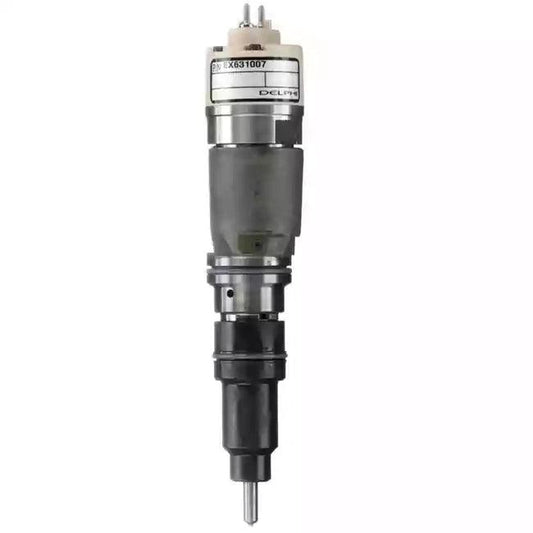
Save the injector part number or code, engine model and serial number, equipment identification, and measured results. Check the official parts catalog for any serial-number breaks or supersessions. Similar-looking injectors can differ in calibration and coding requirements. After replacement, follow the manufacturer's instructions for cleanliness, sealing parts, torque, and any injector coding or learning routine that applies to your engine.
Need help matching a confirmed replacement? Send FuelPartsPro photos of the old injector markings, the engine data plate, and the diagnostic findings so the correct part can be checked before you order.