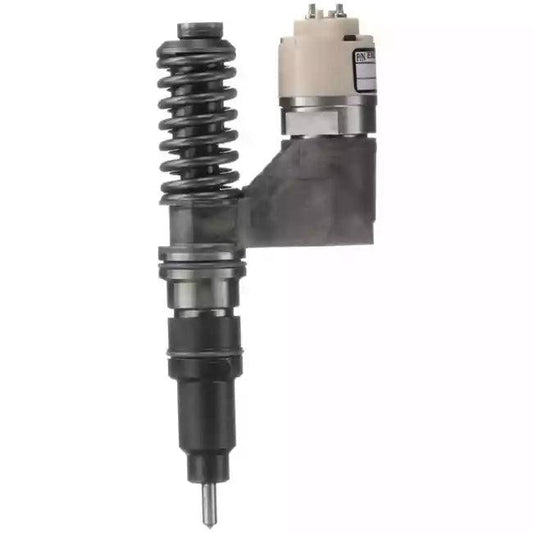


What Is P0087?
P0087 is one of the most common and most searched diesel engine fault codes in the world. It means: Fuel Rail/System Pressure – Too Low. When your engine's ECM logs P0087, it has detected that the actual fuel pressure in the common rail is below the target pressure commanded for the current operating condition.
P0087 is a universal OBD-II code — it applies to virtually every diesel engine equipped with a high-pressure common rail (HPCR) fuel system, including Cummins, Caterpillar, Komatsu, Volvo, Isuzu, John Deere, Perkins, Mitsubishi, and many others. Understanding what causes it, how to diagnose it correctly, and what to replace is essential knowledge for any diesel technician or equipment owner.
1. What Causes P0087?
P0087 is a symptom code, not a root cause. It tells you the rail pressure is too low, but not why. There are multiple possible causes, and diagnosing them in the correct order saves time and money. Here are the most common causes, ranked from most to least likely:
1. Clogged or Restricted Fuel Filter (Most Common)
A blocked primary or secondary fuel filter restricts fuel flow to the high-pressure pump, starving it of supply. This is the #1 cause of P0087 and should always be checked first. If the filter hasn't been changed recently, replace it before doing anything else.
2. Weak or Failed Fuel Lift Pump / Transfer Pump
The lift pump (also called the transfer pump or feed pump) is responsible for supplying fuel to the high-pressure injection pump at the correct inlet pressure (typically 0.3–0.6 MPa). If the lift pump is weak or failed, the HP pump is starved and cannot build rail pressure. On many machines, the lift pump is electric and can fail without warning.
3. Worn High-Pressure Injection Pump
The HP pump's internal plungers and barrel wear over time, reducing volumetric efficiency. A worn pump cannot generate sufficient pressure even with adequate fuel supply. This is typically a gradual failure that worsens over time.
4. Faulty Fuel Pressure Control Valve (PCV) / Metering Unit (SCV)
The pressure control valve (on the rail or pump outlet) or suction control valve (on the pump inlet) regulates rail pressure by controlling fuel flow. A stuck-open PCV bleeds off pressure; a stuck-closed SCV starves the pump. Both can trigger P0087.
5. Leaking or Damaged High-Pressure Fuel Lines
A crack, loose fitting, or damaged high-pressure line between the pump and rail (or rail and injectors) allows fuel to escape, reducing rail pressure. Even a small leak at high pressure can cause significant pressure loss.
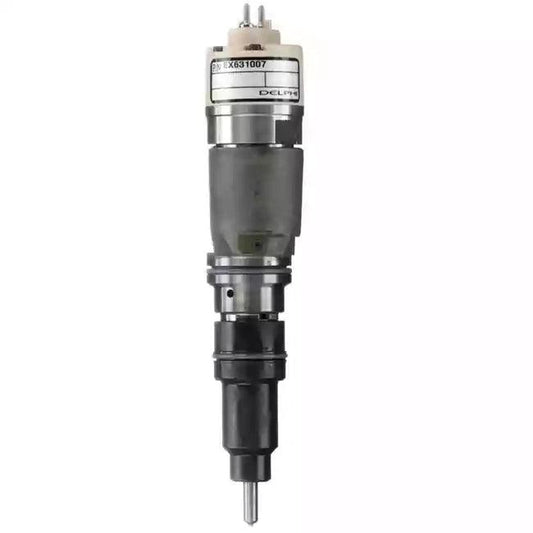
6. Excessive Injector Back-Leak
Worn injectors allow excessive fuel to return through the leak-off circuit, reducing the net fuel available to maintain rail pressure. If multiple injectors are worn, the combined back-leak can be enough to trigger P0087 under load.
7. Faulty Rail Pressure Sensor
A failed or out-of-calibration rail pressure sensor can report falsely low pressure to the ECM, triggering P0087 even when actual rail pressure is normal. This is less common but should be considered after ruling out other causes.
8. Air in the Fuel System
Air ingestion through a leaking inlet line, failed lift pump check valve, or loose filter housing can cause intermittent P0087, especially at startup or after the machine has been sitting.
2. Symptoms Associated with P0087
P0087 rarely appears in isolation. It is typically accompanied by one or more of the following symptoms:
- Hard starting or extended cranking — the pump cannot build rail pressure quickly enough during cranking
- Power loss / engine derate — the ECM limits fuel delivery to protect the system when rail pressure is insufficient
- Rough idle or engine stalling — inconsistent rail pressure causes uneven injector firing
- Black smoke under load — the ECM commands maximum fuel delivery to compensate for low pressure, causing over-fueling
- Engine hesitation or surging — intermittent pressure drops cause momentary power loss
- MIL (Check Engine / Warning Light) illuminated
3. Step-by-Step Diagnosis Procedure
Follow this sequence to diagnose P0087 efficiently. Do not skip steps or replace expensive components before completing the basic checks.
Step 1: Check & Replace the Fuel Filter
This takes 15 minutes and costs almost nothing compared to a pump or injector. If the filter is overdue or unknown, replace it now. A clogged filter is the cause of P0087 in a significant percentage of cases. After replacement, clear the code and test drive/operate the machine.
Step 2: Check Fuel Supply Pressure at the HP Pump Inlet
Connect a low-pressure gauge (0–1 MPa range) to the fuel inlet port of the high-pressure injection pump. Start the engine and measure supply pressure at idle and under load. Normal supply pressure is typically 0.3–0.6 MPa. Low supply pressure confirms a lift pump or supply restriction issue — not an HP pump problem.
Step 3: Test the Lift Pump
If supply pressure is low, test the lift pump directly. For electric lift pumps: check for correct voltage at the pump connector with the ignition on. If voltage is present but pressure is low, the pump has failed. For mechanical lift pumps (driven off the engine): check for correct output pressure and flow rate per the service manual specification.
Step 4: Monitor Live Rail Pressure with a Scan Tool
Connect a diagnostic tool (Cummins INSITE, Cat ET, Volvo PTT, Komatsu EMMS, or generic OBD scanner) and monitor live rail pressure. Compare actual rail pressure to the ECM's commanded target pressure across the RPM range. A large gap between commanded and actual pressure at full load confirms HP pump wear or a faulty pressure control valve.
Step 5: Test the Pressure Control Valve (PCV)
With the engine running, monitor the PCV duty cycle via the scan tool. If the ECM is commanding maximum PCV closure but rail pressure is still low, the HP pump is worn. If the PCV duty cycle is normal but pressure is low, the PCV itself may be stuck open — test by temporarily blocking the return line (briefly) and observing pressure response.
Step 6: Perform an Injector Back-Leak Test
Disconnect the injector return lines and route them into measuring containers. Run the engine at idle for 30 seconds and measure the return volume from each injector. Compare to the OEM specification. Excessive back-leak from one or more injectors confirms injector wear contributing to low rail pressure.
Step 7: Check the Rail Pressure Sensor
If all mechanical components test within specification but P0087 persists, test the rail pressure sensor. Compare the sensor's voltage output to a known-good pressure reading from a mechanical gauge. A significant discrepancy confirms a faulty sensor.
4. P0087 on Specific Engine Platforms
While P0087 is universal, the most likely cause varies by engine platform and application:
- Cummins QSB6.7 / ISB / ISC — Most commonly caused by a worn Bosch CP3 pump or clogged fuel filter. The CP3 wears gradually, so P0087 often appears first under heavy load before becoming a constant fault.
- Caterpillar C6.4 / C7 / C9 — Clogged filter and worn HP pump are the most common causes. CAT engines are also sensitive to air ingestion through loose filter housing O-rings.
- Isuzu 4HK1 / 6HK1 — Worn Denso HP3 pump is a frequent cause on high-hour Hitachi excavators. The SCV solenoid on the HP3 pump is also a common failure point.
- Volvo D6E / D7E — Clogged filter and worn HP pump. Volvo engines are particularly sensitive to water contamination in the fuel.
- John Deere 6068 (HPCR) — Failed electric lift pump (RE515718) is a very common cause. Always check lift pump supply pressure first on John Deere equipment.
- Komatsu PC200-8 (Cummins 6D107) — Worn Bosch CP3 pump or clogged filter. Monitor rail pressure with Komatsu EMMS for accurate diagnosis.
5. Repair Options
Once you've identified the root cause, here are the repair options:
- Clogged filter: Replace the primary and secondary fuel filters. Always replace both at the same time.
- Failed lift pump: Replace the electric or mechanical lift pump. This is a relatively low-cost repair that can prevent expensive HP pump damage.
- Worn HP pump: Replace the high-pressure injection pump with a quality OEM-specification replacement. Do not attempt to rebuild a worn HP pump in the field.
- Faulty PCV/SCV: The pressure control valve or suction control valve can sometimes be replaced separately without replacing the entire pump — consult your parts supplier.
- Worn injectors: Replace injectors showing excessive back-leak. Always replace the copper sealing washer and perform an injector trim/calibration after replacement.
- Faulty rail pressure sensor: Replace the sensor. This is a low-cost repair but requires clearing the fault code and verifying correct pressure readings after replacement.
6. Find the Right Replacement Parts
We stock fuel injection pumps and components for a wide range of diesel engines commonly affected by P0087:
- 0445020043 — Bosch CP3 Pump for Cummins QSB6.7 (Komatsu PC200-8, Case CX210B)
- 294000-1124 — Denso HP3 Pump for Isuzu 4HK1 (Hitachi ZX200-3, ZX210-3)
- 320-2512 — Fuel Injection Pump for Caterpillar C6.4 (CAT 320D, 323D)
- 476-8766 — Fuel Injection Pump for Caterpillar C7
- 0460426103 — Fuel Injection Pump for Cummins 5.9L
- RE515718 — Electric Lift Pump for John Deere 6068
Not sure which part fits your machine? Contact us with your engine model and serial number and we'll help you identify the correct replacement.