

The Backbone of 20-Ton Excavators: Komatsu PC200-8 Fuel Architecture
The Komatsu PC200-8 (along with sister variants PC200LC-8, PC220-8, and PC270-8) is universally regarded as the global benchmark for 20-ton hydraulic crawler excavators. At the heart of this machine lies the turbocharged, charge-air-cooled Komatsu SAA6D107E-1 diesel engine—a 6.69-liter inline-six power plant engineered jointly with Cummins (sharing architectural heritage with the Cummins QSB6.7) and equipped with an electronically controlled high-pressure common rail (HPCR) injection system.
Operating at hydraulic pressures reaching 1,600 to 1,800 bar (23,200 to 26,100 psi), the SAA6D107E-1 HPCR system balances tight particulate emission standards with exceptional hydraulic responsiveness. However, when fuel delivery issues develop, operators quickly face crippling machine downtime: abrupt loss of hydraulic breakout force, engine speed hunting (surging) under pump load, extended cranking or refusal to restart hot, heavy black smoke under acceleration, and severe engine derate triggered by the Komatsu EMMS (Electronic Maintenance Management System) monitor panel.
Too often, field technicians replace the expensive high-pressure injection pump prematurely without realizing that a stuck inlet metering valve, aerated suction line, or blown pressure limiter is starving the common rail. This comprehensive engineering guide breaks down the SAA6D107E-1 fuel system architecture, diagnostic fault codes, component cross-references, and step-by-step diagnostic sequences.
Technical Specifications & OEM Cross-Reference Hub
The PC200-8 fuel injection system relies on a high-output Bosch CP3.3 radial-piston high-pressure pump feeding forged steel rail manifolds and Bosch CRIN2 electronically controlled solenoid injectors. Precision part matching is critical; slight variations in pump flange mounting or injector flow calibration between on-highway and off-highway calibrations will cause erratic fueling.
| Component | Komatsu OEM Part # | Bosch / Tier-1 Part # | Engine / Equipment Application |
|---|---|---|---|
| High-Pressure Fuel Pump | 6754-72-1012, 6754-71-1010, 6754-71-1012 | 0445020109, 0445020043, 0445020150 | Komatsu PC200-8, PC220-8, PC270-8, SAA6D107E-1 / SAA4D107E |
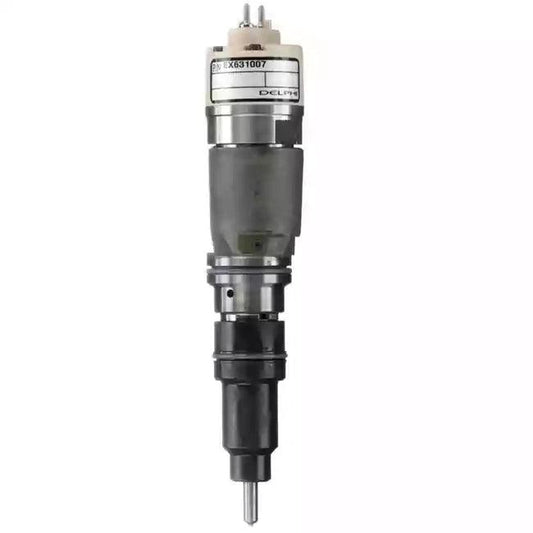
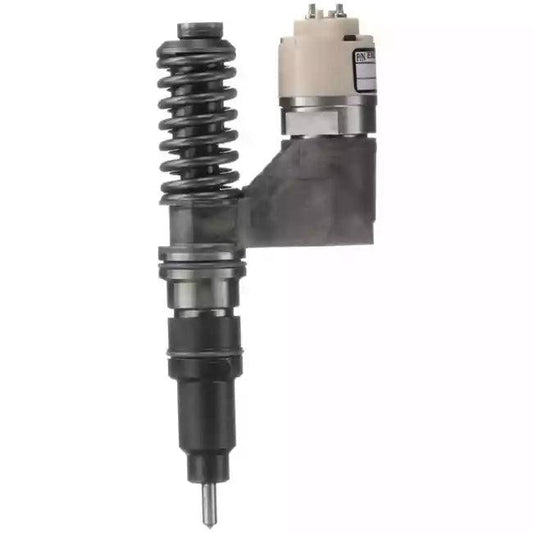
| Common Rail Fuel Injector | 6754-11-3010, 6754-11-3011, 6754-11-3012 | 0445120059, 0445120231, 0986435555 | Komatsu SAA6D107E-1, SAA4D107E, PC200-8 (Bosch CRIN2 platform) |
| Inlet Metering Valve (IMV / PCV) | 6754-71-1210, 6754-71-1220 | 0928400617, 0928400717 | Mounted on CP3.3 pump gear housing; controls delivery volume |
| Pressure Limiter Valve (PRV) | 6754-71-1310 | 1110010020, 1110010028 | High-pressure rail end; mechanical pop-off set at ~1,850 bar |
| Rail Pressure Sensor (RPS) | 6754-71-1410 | 0281002937, 0281006405 | 3-wire 5V piezoresistive transducer mounted center of rail |
Komtrax & EMMS Fault Codes: Critical Fuel Error Codes
When the Komatsu engine controller detects an abnormal fueling condition, it logs an alphanumeric code accessible via the cab monitor service menu or Komatsu Service Tool:
- CA559 (Supply Pump Pressure Low): Equivalent to SAE J1939 SPN 157 FMI 18 and OBD P0087. Triggered when actual rail pressure drops more than 15 to 20 MPa below target pressure under heavy hydraulic loading. Common causes include clogged pre-filters, aerated fuel lines, sticking IMV, or high injector back-leakage.
- CA553 (Supply Pump Pressure High): Equivalent to P0088 and SPN 157 FMI 16. The rail pressure exceeds commanded values by over 15 MPa. Usually caused by a jammed-closed IMV/PCV solenoid or a blocked fuel return manifold creating backpressure.
- CA2249 (Common Rail Pressure Abnormally Low): Severe pressure drop below minimum operational threshold (< 20 MPa while cranking or running). Causes immediate engine shutdown or no-start.
- CA271 / CA272 (PCV / IMV Solenoid Circuit): Open circuit (CA272) or short circuit (CA271) in the fuel metering solenoid wiring harness on the CP3.3 pump.
- CA448 / CA449 (Rail Pressure Sensor High / Low Voltage): Electrical signal out of range (> 4.75V or < 0.25V), indicating wiring harness damage or a failed pressure transducer.
Step-by-Step Diagnostic Protocol for SAA6D107E-1 Fuel Issues
Step 1: Low-Pressure Delivery & Suction Vacuum Test
Never condemn the high-pressure system until the low-pressure supply circuit is fully qualified:
- Check the 2-Micron Water Separator & Main Filter: Komatsu machines require high-efficiency filtration. Remove and inspect the primary filter bowl for sediment, black sludge (asphaltite/algae), or metal glitter.
- Measure Vacuum at Lift Pump Inlet: Connect a vacuum test gauge to the inlet fitting of the low-pressure mechanical gear pump (mounted on the rear of the CP3.3 pump). At high idle (1,900 RPM), vacuum should read between 4 and 8 in.Hg (13 to 27 kPa). If vacuum exceeds 10 in.Hg (34 kPa), the tank suction pickup tube screen is obstructed or fuel lines are kinked.
- Inspect for Air Bubbles: Air entering through cracked rubber hoses, water separator drain valves, or the hand primer pump will compress in the CP3 plungers, triggering rapid CA559 derate codes.
Step 2: Pressure Limiter Valve (PRV) Static Return Test
The mechanical pressure limiter valve protects against burst pressures exceeding 1,850 bar. Once a PRV pops open due to a pressure spike, its precision seat can become grooved or eroded, allowing constant fuel bypass directly to the return tank.
Testing Method: Disconnect the rubber return line from the rail relief valve fitting at the rear of the fuel rail. Plug the return line to prevent backflow from other components, and route a clear hose from the PRV spigot into an empty bottle. Crank the engine or idle at 1,000 RPM. Zero fuel should leak from the PRV. If fuel drips or streams out, the PRV is defective and dumping system pressure. Replace the relief valve.
Step 3: Injector Dynamic Back-Leakage (Leak-Off) Test
Excessive internal leakage across the injector control valve spool is the #1 cause of CA559 and hot-restart refusal on the SAA6D107E-1. For detailed multi-cylinder testing procedures, reference our Diesel Injector Leak-Off Test Guide.
On the PC200-8, remove the rocker cover and measure individual return volume using a calibrated test manifold during 60 seconds of cranking with the IMV disconnected (commanding maximum pressure). Any cylinder returning more than 2.5 to 3.0 times the average of other cylinders has worn internal valve seats and must be replaced.
Step 4: Inlet Metering Valve (IMV / PCV) & CP3.3 Output Test
If low pressure and injectors are within specification, evaluate the high-pressure pump:
- IMV Solenoid Resistance: Disconnect the 2-pin connector on the CP3.3 pump. Measure resistance across the pins. Specified value is 2.5 to 3.5 Ohms at 20°C. An open coil or ground short triggers CA271/CA272.
- Deadhead Cranking Test: Using the Komatsu monitor panel service diagnostics, monitor common rail pressure during cranking. The CP3.3 pump must build at least 25 MPa (250 bar) within 3 seconds. If pressure remains under 10 MPa despite bubble-free fuel supply, the pump's internal delivery valves or drive shaft coupling have failed.
CRITICAL ENGINEERING SAFETY WARNING: 1,800 BAR COMMON RAIL HAZARD
DANGER: Komatsu HPCR systems store hydraulic energy up to 1,800 bar (26,100 psi).
Never loosen or \"crack\" high-pressure fuel lines or injector fittings while the engine is running or cranking. A high-velocity diesel pinhole leak can pierce skin and deep tissue instantly, causing chemical poisoning, vascular trauma, and gangrene requiring surgical debridement or amputation.
- Shut off the machine and wait at least 10 to 15 minutes for rail pressure to dissipate.
- Verify on the cab monitor panel that rail pressure reads 0 MPa before cracking line nuts.
- Always wear safety glasses, heavy nitrile/leather work gloves, and protective clothing during fuel line servicing.
Installation & Commissioning Standards for PC200-8
When installing a replacement CP3.3 pump or CRIN2 injectors on the SAA6D107E-1 engine:
- Gear Timing Verification: While the Bosch CP3.3 pump is non-synchronous (it does not require strict mechanical injection timing like older mechanical inline pumps), aligning the drive gear timing marks ensures smooth hydraulic pulsation damping and avoids torsional stress on the camshaft drive train.
- Cleanliness Protocol: Wash down the cylinder head and engine bay thoroughly before pulling injectors. Cap all exposed delivery pipes immediately. A single particle larger than 5 microns will ruin new injector needle clearances.
- Injector QR Code Compensation Programming: Each Bosch CRIN2 injector has an alphanumeric calibration code printed on its electrical solenoid head. After installation, input these codes into the Komatsu engine controller via the service tool to calibrate individual cylinder micro-fueling.
- Priming the System: Pump the manual hand primer on the water separator until firm resistance is felt. Never start the engine dry; operating a CP3.3 pump without diesel lubrication will gall the internal plungers in seconds.
Shop Komatsu SAA6D107E-1 Precision Fuel Components
FuelPartsPro stocks OEM-grade, factory-calibrated fuel injection assemblies for Komatsu excavators and loaders, ready for immediate global dispatch:
- 6754-72-1012 / 0445020109 High-Pressure Fuel Injection Pump (Komatsu PC200-8 / SAA6D107E-1)
- 0445120059 / 0445120231 / 6754-11-3011 Common Rail Fuel Injector (Komatsu SAA6D107E-1)
- 0445020070 / 6271-71-1110 Fuel Injection Pump (Komatsu SAA4D95LE / PC130-8)
- 0445110307 / 6271-11-3100 Fuel Injector (Komatsu SAA4D95LE / SAA6D95LE)
- 6745-71-1170 / 6745-71-1180 Fuel Injection Pump (Komatsu SAA6D114E / PC300-8)
For more diesel common rail diagnostic procedures, visit our technical library:
- SPN 157 J1939 Heavy-Duty Fuel Rail Pressure Diagnostic Guide
- P0087 Low Rail Pressure Diagnostic Guide
- P0088 High Rail Pressure Diagnostic Guide
Unsure of your machine's exact arrangement? Komatsu engines feature several sub-variants depending on machine serial numbers. Send us a photo of your engine nameplate or old pump casting number, and our technical team will verify 100% exact fitment.